I´m sorry for the english in a German forum, but me German isnt good enough to write it here yet, maybe later and some more practice
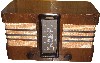
I got this little beaty A ITT weltspiegel 1642 from 1975, i brougt it back to life, and the picture /sound is fantastic, but there´s stil some small issues, first the picture is too wide, i can´t adjust it smaller, the potmeter only works on a very small area, the "o/w kissen" potmeter is also faulty, no change when i turn it from site to site.
i need some advise where i can go to search , ufortunally i don´t have the schematic diagram
so i hope some one inhere have experience
Best Regards Alex
Sie haben keine ausreichende Berechtigung, um die Dateianhänge dieses Beitrags anzusehen.
156
Hello,
welcome to the forum.
Even though I can't offer much insight into the fault, please compare the circuit diagram in this link with the circuitry of your device.
Hallo,
willkommen im Forum
Wenn ich auch wenig zum Fehler beitragen kann, vergleiche mal bitte den Schaltplan hier im Link, mit der Schaltung deines Gerätes
M. f. G.
fritz
- Es ist keine Schande, nichts zu wissen, wohl aber, nichts lernen zu wollen
The fault is in the east-west pincushion correction circuit. It is shown on page 9 of the linked service manual, the circuitry in your set will be similar. In this circuit, the follwing components are frequently faulty: the modulator diodes D512 and D513 and the capacitors connected in parallel, the power transistor T531 and the electrolytic capacitor C532. Please also watch out for dry soldering joints.
Der Fehler liegt in der Ost-West-Korrekturschaltung. Diese ist auf Seite 9 des verlinkten Servicemanuals dargestellt, in Deinem Fernseher wird sie ähnlich aufgebaut sein. In dieser Schaltung sind häufig defekt: die beiden Modulatordioden D512 und D513 und die parallel geschalteten Kondensatoren, der Leistungstransistor T531 und der Elko C532. Bitte auch auf kalte Lötstellen in diesem Bereich achten.
Thank You so much, i novice that the model in the schematic is a model with inline tube, mine is fitted with a deltatube, so is the convergence circuits the same?,
I have not much experience with ctv, online Black and white sets.
fritz52 hat geschrieben: Mo Sep 28, 2026 5:01
156
Hello,
welcome to the forum.
Even though I can't offer much insight into the fault, please compare the circuit diagram in this link with the circuitry of your device.
Hallo,
willkommen im Forum
Wenn ich auch wenig zum Fehler beitragen kann, vergleiche mal bitte den Schaltplan hier im Link, mit der Schaltung deines Gerätes
Thank you so much for the link Fritz, I think it's verden similar to My television except mine is fitted with a deltatube.
Sincerely
Alex
Of course, the convergence circuits für a delta tube are not like those for an inline tube. But the east/west correction circuit is not part of the convergence circuit, it is quite similar. See the circuit excerpt taken from an ITT TV with delta tube.
Natürlich ist die Konvergenzschaltung für eine Delta-Bildröhre anders als für eine Inline-Bildröhre. Die Ost/West-Korrekturschaltung ist aber ähnlich, sie ist kein Teil der Konvergenzschaltung. Siehe Schaltplanausschnitt eines Gerätes mit Delta-Bildröhre.
Lutz
ITT_Ost-West-Schaltung.JPG
Sie haben keine ausreichende Berechtigung, um die Dateianhänge dieses Beitrags anzusehen.
first i would like to say thanks for so gratefull help in this forum, espicially Lutz , i found the fault, one of the two modulation diodes was broken, but i replace booth of them including the two caps around them, now i have the right picture on the screen, now i only have some smalle issues with the convergence, but i have absolutely NO good experience how to adjust it, i know the convergence panel is under the TV, is there a kind of precedure for TV´s with delta tubes?i know they have a lots of more adjustments thans the later in-line sets have.
Thanx again for the help
Sie haben keine ausreichende Berechtigung, um die Dateianhänge dieses Beitrags anzusehen.
I do not have the adjustment instructions for this TV, but the procedure is quite similar for all TVs with delta tube. The controls on the convergence unit are usually marked with pictograms that indicate the function of each control. There are controls for aligning the red and green lines with each other, and others for aligning the blue lines with the other two colors.
First, adjust the convergence at the center of the screen. This is called "static convergence". Coarse adjustment is by means of adjustable magnets on the deflection unit, fine adjustment using the corresponding controls on the convergence unit.
Afterwards, adjust the dynamic convergence. There are controls for horizontal and vertical coverage in the top, bottom, left, and right image areas.
If controls are provided for correcting residual errors in the image corners, these are adjusted last.
Some settings influence each other to some extent. In this case, adjust the settings alternately to get an optimal result.
Sometimes it is not possible to bring the lines into perfect alignment. The remaining deviation should then be averaged.
Ich habe die Einstellanweisung für diesen Fernseher nicht, aber die Vorgehensweise ist bei allen Fernsehern mit Delta-Röhre ähnlich. Meist sind die Einsteller auf der Konvergenzeinheit mit Piktogrammen versehen, an denen man erkennt, welcher Einsteller wofür ist. Es gibt Einsteller, mit denen die roten und grünen Linien zur Deckung gebracht werden, und solche für die Deckung der blauen Linien mit den anderen beiden Farben.
Zuerst wird die Konvergenz in Bildmitte eingestellt, das nennt man "statische Konvergenz". Grobabgleich mittels verstellbarer Magnete an der Ablenkeinheit, Feinabgleich mit den entsprechenden Einstellern auf der Konvergenzeinheit.
Danach wird die dynamische Konvergenz eingestellt. Es gibt Einsteller für die horizontale und die verikale Deckung in den Bildbereichen oben, unten, links und rechts.
Falls Einsteller für die Korrektur von Restfehlern in den Bildecken vorhanden sind, werden diese zum Schluss eingestellt.
Manche Einstellungen beeinflussen sich gegenseitig etwas. Dann muss man die Einstellung abwechselnd wiederholen, um ein optimales Ergebnis zu erhalten.
Manchmal gelingt es nicht, die Linien vollständig zur Deckung zu bringen. Dann muss man den Restfehler ausmitteln.